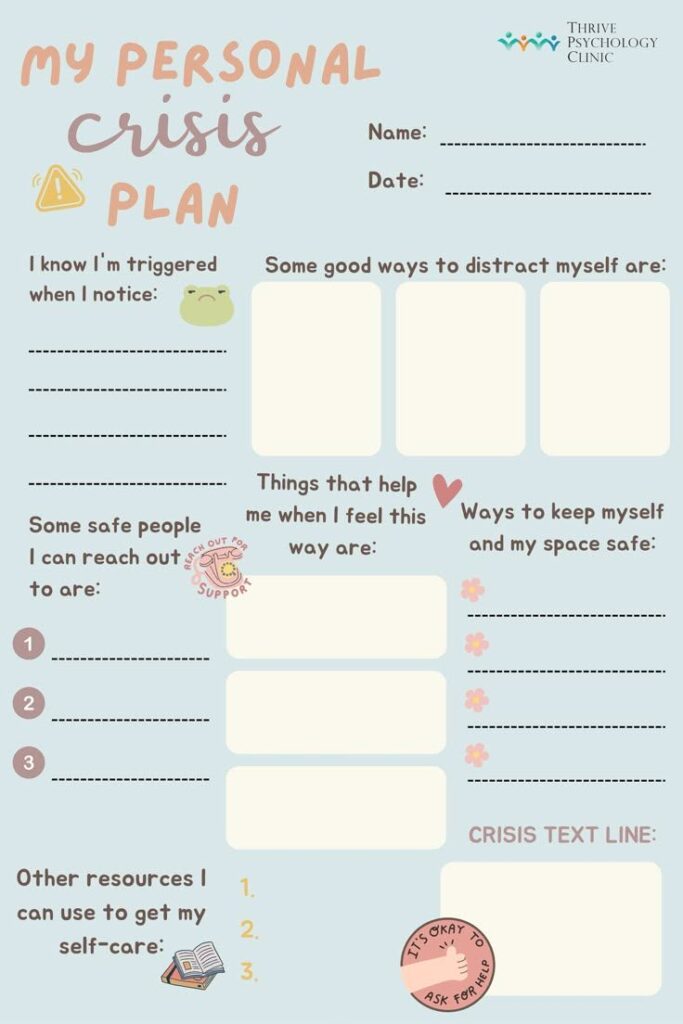
Children can significantly benefit from personal crisis or safety plans, as these plans provide a structured guide to identify warning signs, coping strategies, and support systems for managing mental health or behavioral crises. These plans help prevent escalation, provide direction during difficult moments, and give both the child and family a sense of control and peace of mind during stressful situations. It is best to create a crisis plan when the child is in a stable state, and mental health professionals can help you and your child develop an effective plan tailored to their specific needs.
What a Crisis Plan Includes
- Warning Signs: Early indicators that a child is becoming distressed or entering a crisis state, such as increased isolation, irritability, or physical signs like clenched fists.
- Coping Strategies: Techniques the child can use to manage distress and regulate their emotions, like listening to music, engaging in hobbies, or using deep breathing exercises.
- Support System: A list of trusted adults, including family, friends, or mental health professionals, whom the child can contact for help.
- Safe Environment: Ways to ensure the immediate environment is safe by removing potential dangers or distractions.
- Emergency Contacts: A readily available list of emergency numbers, including crisis hotlines or 911.
How a Crisis Plan Helps
- Empowers the Child: It gives children a proactive way to manage their feelings and behaviors before they escalate.
- Provides a Roadmap: It offers a clear, step-by-step guide for caregivers to follow, minimizing chaos and confusion during a crisis.
- Promotes Safety: By identifying potential risks and safety measures, it helps protect the child from harm to themselves or others.
- Fosters Communication: The planning process itself creates opportunities for open dialogue between the child and caregivers about mental health challenges.
When to Create a Plan
- Proactively: The best time to create a crisis plan is when the child is calm and stable, not in the midst of a crisis.
- Collaboratively: Work with mental health professionals and your child to ensure the plan is personalized and effective.
- Continuously: Plans should evolve over time and with the child’s age to meet their changing needs.